EN − AZN
 Azərbaycan
 Русский

Close
Account
Close
Cart
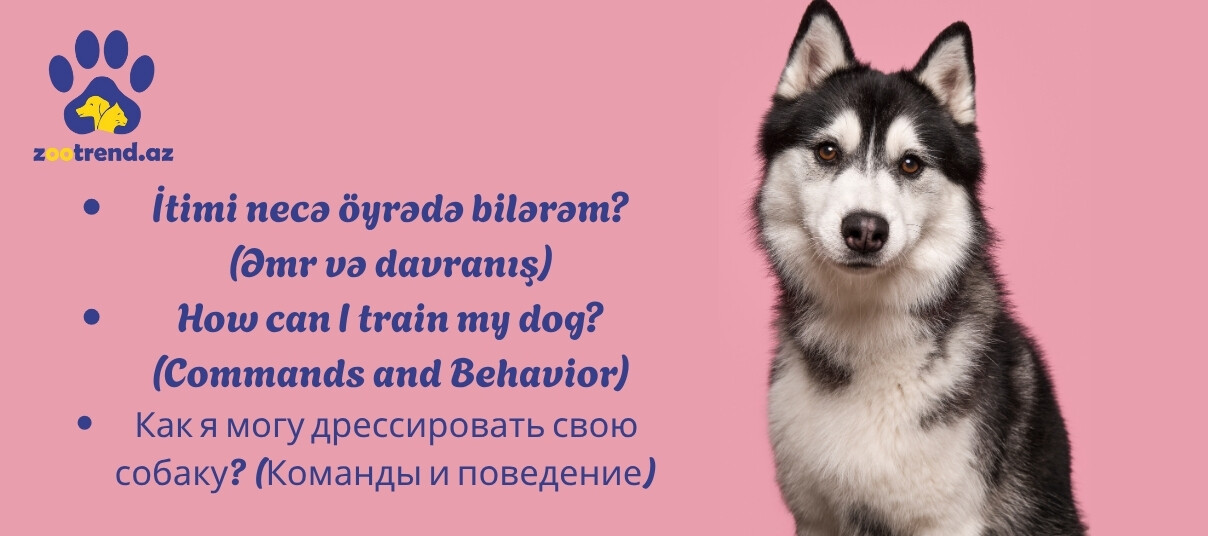
Dog Training: Teaching Commands and Behaviors
Key Points to Know Before Training Your Dog
Psychology and Basic Principles:
Dogs are naturally social animals and tend to obey leaders and follow the group. Positive reinforcement (treats, praise) is the most effective method; avoid punishment and violence. Dogs understand short, clear, and consistent commands better. Repetition and routine strengthen memory. Training sessions should last 5–15 minutes depending on the dog’s attention span.
Teaching Basic Commands and Methods
“Sit” Command: Move a treat from under the dog’s nose to behind its head. When the dog sits naturally, say “Sit!” and reward immediately. Repeat and gradually reduce the treat.
“Lie Down” Command: After teaching “Sit,” move the treat forward and to the floor. When the dog lies down, say “Down!” and reward.
“Come” Command: Call the dog from a short distance with a clear and cheerful “Come!” Praise and reward when it arrives. Gradually increase distance.
“Stay” / “Wait” Command: Place the dog in a sitting position, show your open hand, and say “Stay!” Reward when it stays a few seconds. Gradually increase duration.
“No” / “Stop” / “Quiet” Commands: Use short, firm commands for undesirable behavior. Combine with positive reinforcement. “Quiet” is useful for excited or barking dogs.
Shaping Proper Behaviors
Walking calmly: Teach “Heel!” to walk quietly beside you. Start with short sessions and gradually extend.
Reduce barking: Use “Quiet!” command and distract with toys or treats.
Fetch: Teach “Bring it!” to bring toys during play. Reward when returned.
Home rules: Sit before entering, wait before meals, etc.
Training According to Dog’s Age and Breed
Puppies (2–6 months): Short, frequent sessions. Include socialization and environmental exposure.
Adult or senior dogs: Require more patience and repetition. Consider past habits.
Breed differences: Smart, obedient breeds (Labrador, Border Collie) learn faster; independent breeds (Basenji) require more motivation and repetition.
Essential Elements of Training
Rewards: Treats, love, verbal praise. Give immediately after correct behavior.
Avoid punishment: Physical punishment and shouting are discouraged. Short firm words like “No!” can be used gently.
Consistency: Daily practice. Same tone for commands.
Environment: Start in a quiet, low-distraction area, then gradually increase difficulty (park, street).
Problem Solving
| Problem | Cause | Solution |
|---|---|---|
| Inattention | Fatigue, lack of interest | Make sessions short and fun |
| Excessive barking | Fear, attention-seeking | “Quiet!” command and distraction |
| Disobedience | Leadership gap, weak connection | Focus on leadership, consistent training |
| Over-reliance on treats | Imbalanced rewards | Balance with play and verbal praise |
Additional Tips
Start training early.
Build trust and a loving bond with your dog.
Professional trainer help can be useful.
Use training videos and books to improve skills.
Causes of Excessive Scratching in Dogs
How frequently should we bathe dogs?
The main reasons why my dog wants to sleep in my bed.
The reasons why dogs sniff everything.
Vaccines that dogs should receive.
My dog barks a lot, what should I do?
How can I teach my dog commands and behaviors?
How to Train Dogs to Use the Toilet at Home